If you’ve lost weight this year — on a GLP-1, on a calorie-restricted plan, or through sheer willpower — you’ve probably noticed something nobody warned you about. Your clothes are looser, but you also feel softer somehow. Weaker in the knees on stairs. A little less steady getting out of the car. You chalked it up to age. It’s not age. It’s muscle and bone, and you’re losing more of it than you think.
Up to half of people on GLP-1 medications stop taking them within a year. Most regain the weight — often more than they lost — because the diet itself slowed their metabolism down and their body never stopped trying to get back to its old set point. And along the way, a portion of what they lost wasn’t fat. It was lean muscle and bone density, the two things a 50-year-old body can least afford to give up.
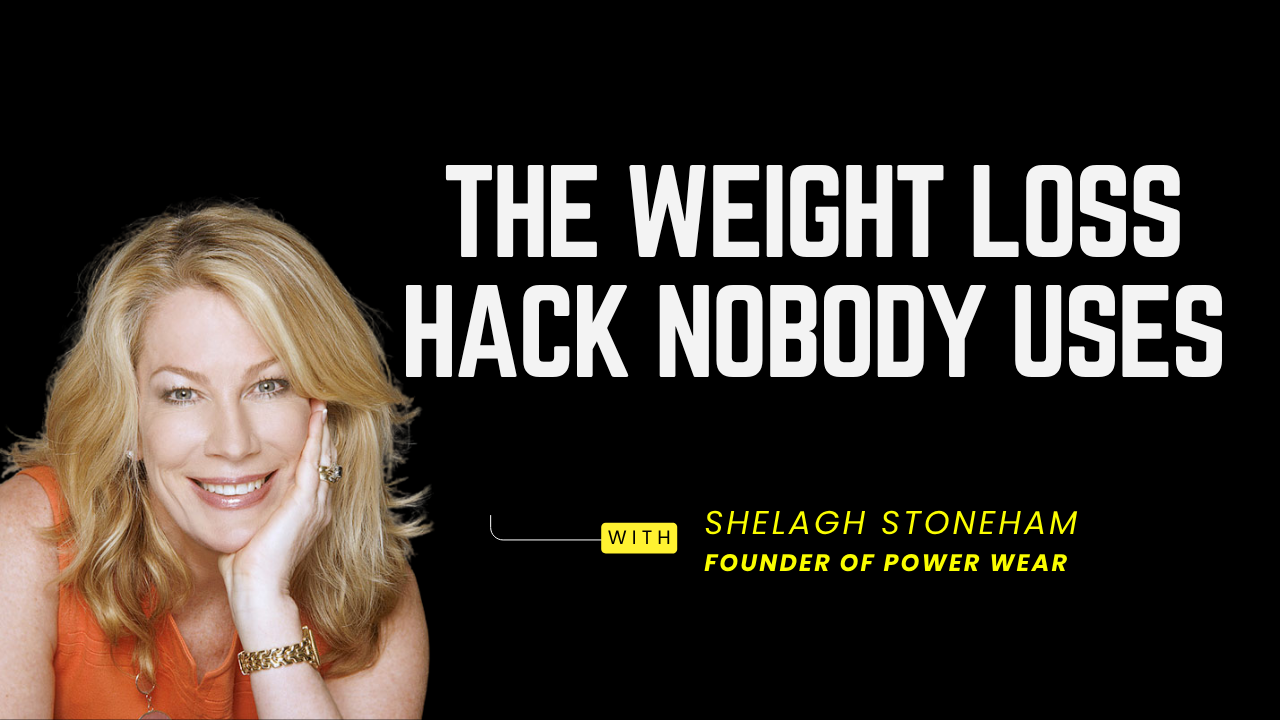
I sat down with Shelagh Stoneham, founder of Power WearHouse, to talk about a strikingly simple tool that’s showing up in more and more of my clients’ routines: the weighted vest. Not the tactical, camouflage kind — a fitted, comfortable one you can wear doing the things you’re already doing. Watch our full conversation below, because what she shared about bone density, metabolic rate, and menopause changed how I think about movement for my patients over 45.
Why This Actually Matters
Here’s the piece most people miss when they start a weight loss protocol: your metabolism doesn’t want you to lose weight. When you restrict calories — whether through diet alone or with the help of a GLP-1 — your body reads that as a threat and downshifts your metabolic rate to defend its previous weight. That’s why the regain after stopping a diet or a medication is so often worse than the starting point. You’re not just fighting willpower. You’re fighting physiology.
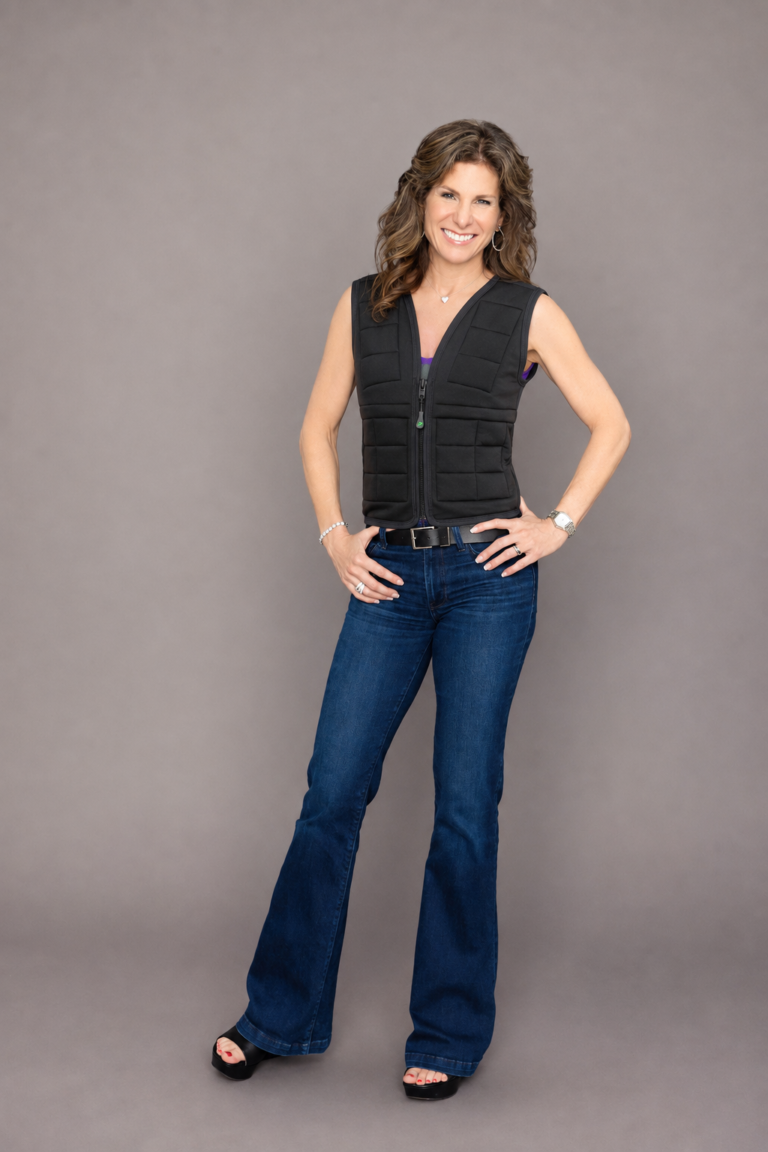
Weighted vests interrupt that signal. When you add external load to your body — even a modest amount — your body responds as though it’s carrying more mass than it is. That mechanical stress helps preserve metabolic rate during a deficit and, just as importantly, loads your skeleton. Bone is living tissue. It responds to stress by remodeling and strengthening. Without that stress — which is exactly what happens when muscle and bone are lost alongside fat during rapid weight loss — you’re building a body that’s lighter, but structurally more fragile.
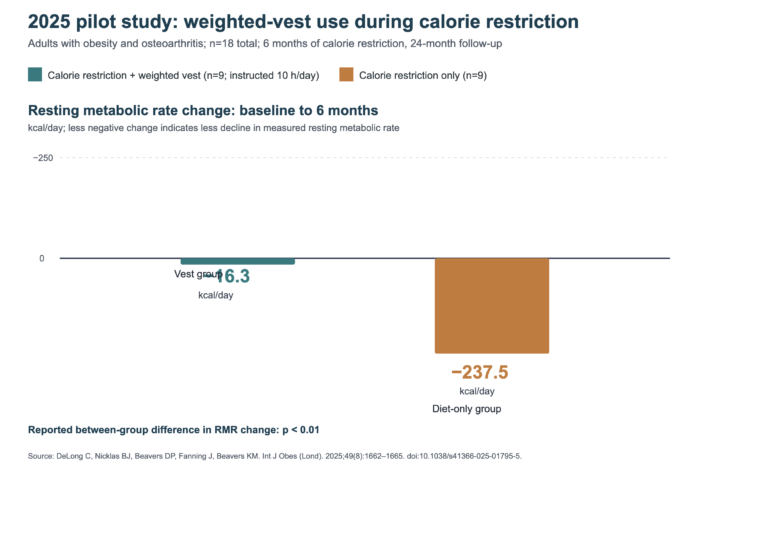
A 2025 pilot study on older adults found that participants who wore a weighted vest during calorie restriction had a significantly smaller drop in metabolic rate than those who dieted without one. That’s not a wellness trend. That’s a measurable physiological difference, and it’s exactly the gap I see in most weight loss protocols I’m asked to review.

The Mistakes Most People Make
Mistake one: treating weight loss as a fat problem alone. The number on the scale doesn’t tell you what you lost. Someone who drops 30 pounds through calorie restriction or a GLP-1 without resistance training or added load can lose a meaningful percentage of that as lean muscle and bone mineral density — the tissue that protects you from falls, fractures, and the slow decline into frailty.
Mistake two: assuming this is only relevant once you already have a diagnosis. Most of the women I work with don’t think about bone density until a DEXA scan surprises them, often around the same time their estrogen starts dropping in perimenopause. Estrogen decline accelerates bone loss directly. If you’re heading into that transition — or already in it — and simultaneously losing weight, you have two forces pulling your skeleton in the same bad direction at once. This is the moment to be proactive, not reactive.
Mistake three: picking the wrong tool and giving up on it. As Shelagh pointed out, most weighted vests on the market are bulky, made of leaking sand pouches, or built for tactical training — uncomfortable enough that they end up in what she calls “the fitness graveyard.” A vest you dread wearing is a vest you’ll stop wearing within a week. The right tool has to disappear into your day, not add friction to it.

Bonni's Clinical Recommendations
If you’re actively losing weight — through diet, exercise, or a GLP-1 medication — here’s what I recommend building into your routine, starting now, not after you’ve hit your goal.
Start light and build gradually. A safe starting point is roughly 2% of your body weight — about 3 pounds for someone at 150 pounds. Add weight incrementally as your body adapts, rather than jumping to a heavy load on day one.
Wear it during what you’re already doing. This isn’t a new workout to add to an already full schedule. It’s dog walks, grocery runs, laundry, airport terminals. The goal is to make the walking you’re already doing work harder for your bones and your metabolic rate, not to carve out another 45 minutes you don’t have.
Pair it with adequate protein and strength work. A vest adds mechanical stress, but it doesn’t replace the raw materials your body needs to rebuild muscle and bone. If you’re in a calorie deficit — especially on a GLP-1, where appetite suppression can make it genuinely hard to eat enough — prioritizing protein at each meal is non-negotiable.
Get individualized guidance if you have an existing bone or joint condition. If you have advanced osteoporosis or significant joint issues, talk with your healthcare provider before adding load. For most healthy adults in midlife, though, this is a low-barrier, high-leverage habit — which is exactly the kind of intervention I look for with my clients. If you want a full assessment of where your metabolic rate, muscle mass, and bone health actually stand — not guesswork, but real data — that’s precisely what we build together in a one on one nutrition coaching plan at London Wellness.
Bonus Tips & FAQs
Do I need a fitness tracker to know if this is working? No. Shelagh made a point I fully agree with: consistency matters more than data. If a tracker helps you stay accountable, use one. If it doesn’t change your behavior, skip it and focus on the habit itself.
Is a weighted vest safe to wear all day? For most healthy adults without skeletal or joint conditions, yes — many people wear one for hours during daily activities. Start conservatively and increase load as your body adapts.
What if I don’t work out at all right now? This is actually the ideal starting point. You don’t need a gym membership to begin. Put the vest by your shoes and wear it on the walks, errands, and chores you’re already doing.
Does this apply to men too? Absolutely. While bone density loss is often discussed in the context of menopause, men lose muscle mass and bone density with age as well, particularly if they’re on a weight loss medication or restrictive diet.
Key Takeaways
- Calorie restriction and GLP-1 medications can cost you muscle and bone density, not just fat, unless you actively counteract it.
- A weighted vest adds mechanical load that helps preserve metabolic rate during a deficit and stimulates bone remodeling.
- Start at roughly 2% of body weight and build gradually — comfort and fit determine whether you’ll actually stick with it.
- Perimenopause and menopause accelerate bone density loss independent of diet, making this doubly important in your 40s and 50s.
- This is a low-barrier habit — it layers onto walks, errands, and chores you’re already doing, not a new time commitment.
- If you have an existing bone or joint condition, get individualized guidance before adding load.
If you’re navigating weight loss and want to know exactly where your metabolism, muscle mass, and bone health stand right now — not next year, when a fracture or a frustrating scale plateau forces the conversation — let’s talk.
Get Connected with Shelagh!
Website: https://powerwearhouse.com
Use this code to get discount: healthyrebels
Instagram: @powerwearhouse_fitness