Imagine this. You’ve cut the carbs. No bread, no rice, no fruit. You’re doing everything the internet told you to do. And then your blood work comes back — and your blood sugar is climbing.
You didn’t cheat. You didn’t slip. You did exactly what you were told.
And yet.
This is the conversation I had on a recent episode of Healthy Rebel Speaks Out with Zane Griggs — a 25-year metabolic health coach, author of Kicking Ass After 50, and one of the rare voices in this space willing to challenge the low-carb world from the inside out. What he shared stopped me cold. Not because it was fringe science. Because it made complete biological sense — and it changes everything about how we’ve been taught to think about blood sugar, metabolism, and what’s really driving the epidemic we’re all swimming in.
Here’s what nobody tells you. And what I believe every person in Sarasota, Lakewood Ranch, and beyond deserves to know.
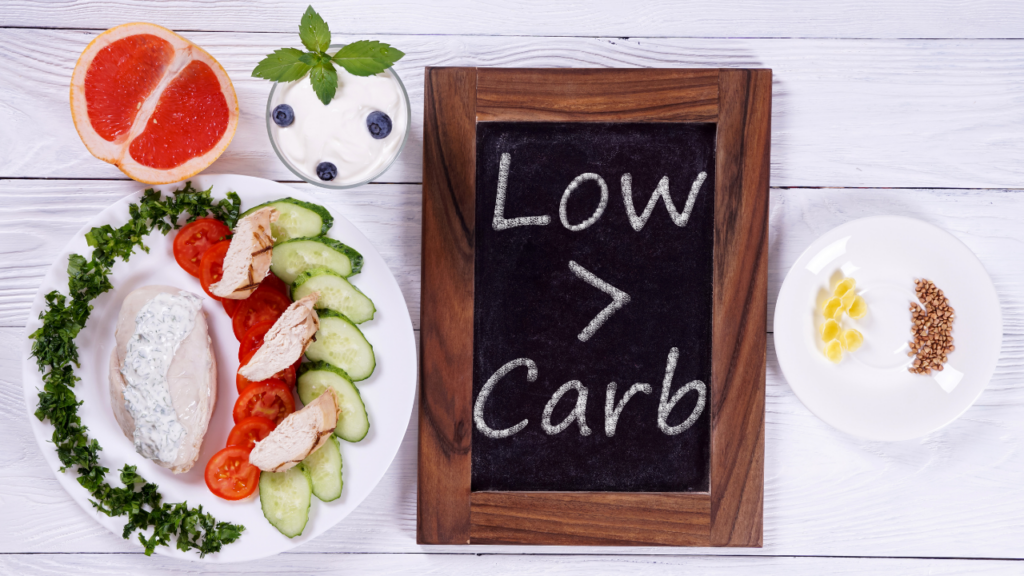
The Low-Carb Paradox: Why Cutting Carbs Can Raise Your Blood Sugar
Let’s start with the thing that made my jaw drop.
When you drastically restrict carbohydrates — think ketogenic or carnivore-level restriction, below 30 grams a day — your body doesn’t just quietly switch to burning fat. It panics.
Your liver, now running low on glucose, ramps up a process called gluconeogenesis: the manufacturing of glucose from other raw materials, primarily protein, lactate, and the glycerol backbone of fat. This sounds efficient. It isn’t. It’s expensive, stressful, and driven by stress hormones — specifically glucagon.
Glucagon is the hormone that tells your liver to release glucose into the bloodstream. In a healthy, balanced system, insulin acts as the counterweight, signaling the liver to shut down that release when there’s enough glucose present. But on a very low-carb diet, insulin is suppressed — because insulin is largely stimulated by carbohydrate intake and by natural GLP peptides in the gut. No carbs coming in means significantly less insulin secretion — sometimes 50 to 70 percent less.
High glucagon. Low insulin. No brakes.
The liver keeps pumping glucose. The muscles, in an act of preservation, stop absorbing as much of it — because your brain, which cannot survive without glucose, needs first dibs. Blood sugar sits elevated. A1C creeps up. And you’re standing there confused, holding your strict food log, wondering what went wrong.
Zane saw this in himself. On a moderate low-carb protocol with fasted workouts, his fasting blood sugar hovered around 95 — technically fine, but bothering him. When he dramatically increased his carbohydrate intake — eventually reaching 400 grams a day from whole-food sources — his blood sugar dropped to 79. His A1C, which had been edging toward 5.7, settled at 5.2. And his fasting insulin stayed at a beautifully low 2.4.
The problem was never insulin. It was glucagon. It was metabolic stress.
The Downstream Effects Nobody Warned You About

Here’s where it gets personal — and a little unsettling.
When glucagon is chronically elevated and insulin is chronically suppressed, your body reads this as a signal: we are not in a safe environment. There is a famine. There is danger.
And so it responds the way evolution designed it to respond under scarcity. It slows your metabolism. It lowers thyroid output. It reduces sex hormone production. It tells your reproductive system: this is not a time to thrive.
Hair thinning. Low libido. Brain fog. A metabolism that seems to have given up.
As a Registered Dietitian in Sarasota who works with hundreds of clients in this exact age range — adults navigating perimenopause, menopause, thyroid issues, unexplained fatigue — I cannot tell you how many times I’ve sat across from someone who is doing everything right by the influencer playbook, and is miserable. Tired. Cold. Losing hair. And convinced they just need more willpower.
They don’t need more willpower. They need a different framework.
The thyroid connection here is critical. Chronically low insulin signals cellular energy scarcity, which directly impacts thyroid hormone conversion. If you’ve been told your thyroid is “normal” but you feel like a different person than you did five years ago, this mechanism is worth understanding. It’s also worth having someone actually look at the full picture — not just a TSH.
The Real Culprit: What's Actually Driving Metabolic Disease

Now we get to the part that should be on the front page of every newspaper in America.
Diabetes cases worldwide went from 200 million in 1990 to 830 million in 2022. In 1930, type 2 diabetes affected 0.3 percent of the U.S. population. Today, we’re looking at 13 percent diagnosed — and arguably 30 percent if you include prediabetes and undiagnosed insulin resistance.
What changed?
Not bread. Not rice. Not potatoes. Populations across Asia, the Mediterranean, and South America have eaten 60 to 85 percent of their calories from carbohydrates for thousands of years — and historically had virtually no metabolic disease. The moment we exported American-style processed food to those countries? The epidemic followed. Japan, India, China — metabolic disease rates climbed right alongside the arrival of fast food chains.
The common denominator, according to Zane — and increasingly supported by mechanistic research — is processed polyunsaturated seed oils.
Soybean oil, cottonseed oil, canola, safflower, sunflower. These oils didn’t exist before 1910. Crisco launched in 1911. And they now make up approximately 20 percent of the average American’s total caloric intake. Soybean oil alone accounts for 57 percent of the average American’s fat intake.
Here’s why that matters at the cellular level.
Mitochondria, Seed Oils, and the Energy Crisis Inside Your Cells

Your mitochondria — the tiny powerhouses inside every cell — produce ATP, which is your body’s cellular energy currency. The efficiency of that production depends heavily on what you’re burning as fuel.
Glucose is approximately 13 percent more efficient than fat at producing ATP. That gap matters enormously to your brain, which will trigger a stress response if it senses even a slight dip in energy availability.
Polyunsaturated fats (PUFAs), particularly the omega-6 linoleic acid that dominates seed oils, are chemically unstable at body temperature. They have multiple “double bonds” — molecular openings where oxidative stress can take hold. A saturated fat is essentially fortress-sealed. A monounsaturated fat, like olive oil, has one small opening. Linoleic acid has two, making it 40 times more susceptible to oxidation. Omega-3s have six double bonds and are 320 times more susceptible.
When these unstable fats flood the mitochondria, they generate reactive oxygen species — free radicals that damage the inner mitochondrial membrane, interfere with ATP production, and trigger a cascade of cellular stress. The body responds exactly as it does to starvation: glucagon and cortisol rise, blood sugar goes up, fat spills from fat cells, and eventually insulin resistance takes hold.
Research on adipose tissue biopsies showed that linoleic acid in American body fat tissue rose from 9 percent in 1959 to 21.5 percent in 2009. Our bodies don’t make polyunsaturated fat — it can only come from what we eat. That accumulation is a direct record of what we’ve been consuming.
The Minnesota Coronary Experiment replaced saturated fat with polyunsaturated fat in participants’ diets. Cholesterol dropped — exactly what researchers wanted. But all-cause mortality went up. The data was buried. It took decades to resurface.
What You Can Actually Do Starting This Week

Before you ever book an appointment with a Registered Dietitian in Sarasota or Lakewood Ranch, there are concrete steps you can take right now.
First, read your ingredient labels for seed oils. Soybean oil, canola oil, sunflower oil, safflower oil, and cottonseed oil are in most packaged foods, most restaurant kitchens, and most salad dressings — even the ones labeled “olive oil.” If you see them in the first five ingredients, put it back.
Cook at home with butter, olive oil, coconut oil, or tallow. These are not the villain they were made out to be in the low-fat era. The science that demonized saturated fat was largely based on research that buried contradictory findings.
Build your carbohydrates from single-ingredient foods — fruit, sweet potatoes, white rice, potatoes. These have fed human populations for 10,000 years without metabolic consequence. The problem was never the rice. It was the soybean oil it was fried in.
Don’t fear carbohydrates. Fear the ultra-processed delivery system they’ve been bundled into for the last hundred years.
And if you’re on a very low-carb diet and your blood sugar is rising, your hair is thinning, or your energy is gone — consider that you may not be eating too much. You may be eating the wrong things, in the wrong ratio, in a way that’s telling your body there’s a crisis.
There isn’t a crisis. But your body doesn’t know that yet.
A Word on GLP-1 Medications

Since we’re on the topic of metabolic health, and since GLP-1 medications are now the top-selling pharmaceutical on the planet, I want to give you Zane’s perspective — which mirrors my own clinical experience at London Wellness.
These medications can be genuinely useful for people who are very metabolically compromised. But taking a GLP-1 and continuing to eat the same ultra-processed food — just less of it — means you are losing muscle alongside fat. What gets called “Ozempic face” is the visible version of a process happening everywhere in your body. Body composition, not body weight, is what actually predicts long-term health.
The most intelligent use of these tools, in both of our views, is cyclic: short courses paired with meaningful dietary and lifestyle change, so that when you come off, the habits carry the work forward.
Medication without metabolic education is just a slower version of the same problem.
If any of this resonates — if you’ve been frustrated by blood sugar numbers that don’t make sense, a metabolism that won’t move, or symptoms your doctor calls “normal” — I want to have that conversation with you.
At London Wellness, I work with adults who are done being told they’re fine when they know they’re not. We use functional lab work, body composition testing with InBody technology, and the London Method — Reveal, Rewire, Reinforce — to get to the root of what’s actually happening in your body.
You can explore your options here — whether you’re just starting out or ready to go deep.
And if belly fat has been your particular nemesis, my free resource Belly Fat to Belly Flat is a good place to start. It’s free, it’s practical, and it will immediately challenge a few things you thought you knew.
Common doesn’t mean normal. And neither does feeling this way.
This content is educational only and is not intended as medical advice. Always work with a qualified healthcare provider for personalized guidance.