You sleep lightly. You reach for your phone before your feet touch the floor, scanning for the text or email that will wreck the day. Your doctor says your blood sugar is “creeping up” and your blood pressure is “a little high.” The explanation you keep hearing is stress, age, or both.
Here is what rarely comes up in the exam room: what happened to you before you turned 18. It also skips what you have absorbed since then, year after year, in a job or a family role that never let you put the weight down.
Most of us treat stress as a mood. Your body treats it as data. It stores that data, acts on it, and eventually shows it to you in your labs.
Common doesn’t mean normal. Feeling braced for impact all the time is common. It is not normal, and it is not a character flaw.
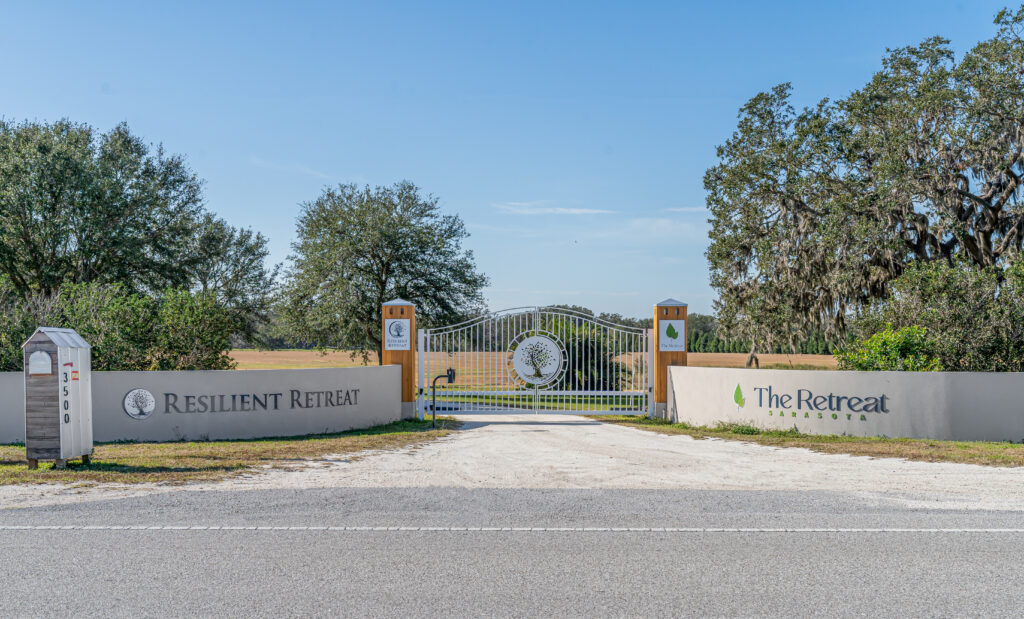
On this episode of Healthy Rebels Speaks Out, I sat down with Lisa Intagliata, CEO of Resilient Retreat in Sarasota. Resilient Retreat is a nonprofit that offers trauma healing programs at no cost to participants. Our conversation connects three things: the mind, the nervous system, and the metabolic markers I track every day as a dietitian.
Why This Actually Matters

Trauma sounds like a rare event. The data says otherwise. According to the CDC, about 64% of U.S. adults lived through at least one adverse childhood experience (ACE). Roughly 1 in 6 lived through four or more. ACEs are stressful or traumatic events that happen before age 18. Examples include abuse, neglect, witnessing violence, and growing up in a home shaped by addiction or mental illness.
The next finding should make every nutritionist, dietitian, and physician pay attention. CDC researchers estimated that preventing ACEs could avoid up to 1.9 million cases of coronary heart disease among U.S. adults. It could also avoid 2.5 million cases of overweight and obesity and 21 million cases of depression.
Read that list again: heart disease, weight, and mood. We usually treat these as separate problems with separate causes. In reality, they share a root.
Long-term research points the same direction. The Nurses’ Health Study II followed nearly 50,000 women for 22 years. Women with the most PTSD symptoms had nearly double the risk of developing type 2 diabetes compared with women who had none.
Lisa explained the mechanism with an image I love. Picture a car with the gas pedal pressed to the floor, all day, every day. The engine never idles, and eventually something breaks. A nervous system stuck in fight or flight works the same way. It keeps stress chemistry running in the background. Over years, that shows up in blood sugar, blood pressure, sleep, appetite, and weight.
Lisa had worked in fundraising for most of her career, and she arrived at this work without a trauma background. She described reading Dr. Bessel van der Kolk’s The Body Keeps the Score as the moment the mind-body connection finally clicked for her. Many of my clients describe the same light bulb.
This is why I tell clients that a lab value is a symptom, not a verdict. In the REVEAL phase of the London Wellness Method, we look under the hood for the pattern behind the number. Sometimes that pattern includes a nervous system that has not felt safe in a very long time. When we see it, the frustrating question finally has an answer: “Why am I doing everything right and still not seeing results?”
The Mistakes Most People Make
-
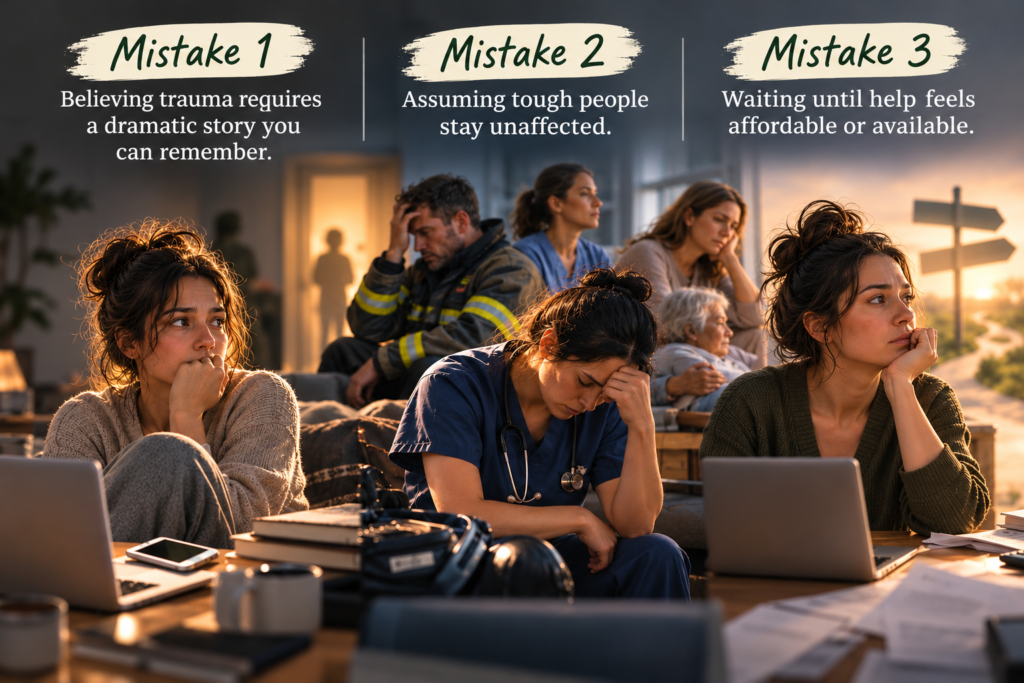
Mistake 1: Believing trauma requires a dramatic story you can remember. Many people carry trauma without clear memories of it. What they have instead is a feeling: tight shoulders, a jump at the doorbell, a constant sense that something bad waits around the corner. Hypervigilance often hides in plain sight. It can look like checking the news, the inbox, and the phone again and again. That habit feels productive, but it often reflects a body trying to prevent the next hurt. Your body can keep score without a detailed narrative. You also do not need to tell anyone your story to start healing. At Resilient Retreat, nobody has to talk about what happened.
Mistake 2: Assuming tough people stay unaffected. First responders, nurses, teachers, and caregivers walk toward what everyone else runs from. The Substance Abuse and Mental Health Services Administration (SAMHSA) has looked at the numbers. It estimates that about 30% of first responders develop behavioral health conditions such as depression and PTSD, compared with about 20% of the general population. Many emergency medical professionals face the next call before they have recovered from the last one. In those professions, admitting the toll can still feel like weakness.
Caregivers deserve the same attention. I spent a decade in long-term care. Family members visiting a loved one often looked more depleted than the patient. Research backs that observation. In a landmark study published in JAMA, spousal caregivers who reported mental or emotional strain had a 63% higher risk of death over four years than non-caregivers. In our region, so many adults care for aging parents and children at the same time that Lisa called caregivers a top priority. Compassion fatigue is real, and most people never name it.
Mistake 3: Waiting until help feels affordable or available. NAMI (the National Alliance on Mental Illness) cites 2024 federal survey data on people with unmet mental health needs who did not get treatment. Among them, 65% thought it would cost too much, and nearly 45% could not find a program or provider. Cost and access stop people long before stigma enters the picture. Waiting rarely makes the body’s stress load lighter.
Bonni's Clinical Recommendations

-
As a Registered Dietitian Nutritionist in Sarasota, I am not a trauma therapist. I will not pretend nutrition alone resolves trauma. What I can tell you after 27 years in practice is simple: you cannot out-supplement a nervous system that never turns off. Here is where I start.
Name the pattern without labeling yourself. Nobody wants a diagnosis. You can still notice the signs. You might lie awake at night or brace for the next message. You might feel numb, or snap at the people you love. Noticing gives you a starting point, not a sentence.
Protect your sleep first. I asked Lisa about the one self-care habit she will not skip. Her answer: she shuts off the TV and goes to bed at a better hour. It would have been the first thing I recommended, too. During sleep, your body recalibrates blood sugar, appetite hormones, and stress chemistry. No eating plan compensates for chronically short, fragmented nights.
Give your nervous system a daily off-ramp. Several practices help shift the body out of fight or flight. These include breathwork, qigong, yoga, time in nature, and mindful creative work like art or music. I also love the Italian walk after a big meal, because it supports blood sugar and calms the system at the same time. Consistency beats intensity. Focus on what you do most often, and use the 80/20 rule instead of chasing perfection.
Bring the whole story to your health team. Your glucose, A1C, blood pressure, or weight may keep climbing despite your best efforts. If so, tell your provider about chronic stress, caregiving load, or past trauma. A good nutritionist for diabetes in Sarasota wants that context. So does any clinician focused on heart disease management in Sarasota, because it changes the plan.
Use the free resources that already exist. Resilient Retreat screens people in with a phone call or an online application that takes less than 10 minutes. Participants choose from 30 to 35 programs a month, and half of them run online. After completing five programs, participants become eligible for three-day overnight retreats on the campus. There, they build a personalized resiliency toolkit with the clinical team. Twice a year, Resilient Retreat also offers six weeks of neurofeedback at no charge. In the community, the same program typically costs $3,000 to $5,000. Resilient Retreat’s own participant data shows the impact:
- 85% reported less burnout.
- 76% reported a better ability to regulate their emotions.
- 70% reported improved depression symptoms.
- 52% reported improved PTSD symptoms.
You might want one-on-one health coaching that connects your labs, your habits, and your stress physiology. If so, explore how we work at London Wellness: [LONDON WELLNESS SERVICES PAGE URL].
Bonus Tips & FAQs
Do I have to talk about what happened? No. Resilient Retreat runs empowerment-based programs that move at the participant’s pace. You can leave any session at any time, and art, sound, and movement classes require no storytelling at all.
Do I need to live in Sarasota? No. Half of the programs run online, and participants join from all 50 states and from other countries. The overnight retreats take place on an 84-acre conservation campus east of I-75, with nature trails, ponds, oak canopies, and horses.
Is this therapy? No. Resilient Retreat does not provide therapy or counseling. Its programs complement that care, and a growing network of therapists now refers clients there.
What if I just need someone to listen? Resilient Retreat runs a kind line, Tuesday through Friday, 8:30 a.m. to 6 p.m., at 941-343-0039. A certified trauma professional answers, and you do not need to screen in first. If you are in crisis, call or text 988 any time.
How can I support this work? Resilient Retreat holds its fifth annual Farm to Table fundraiser on Sunday, November 15, 2026, on its campus. Local chefs and local farms supply the menu, and proceeds fund free services for participants. Find tickets and sponsorships at resilientretreat.org.
Key Takeaways
- About 64% of U.S. adults lived through at least one adverse childhood experience, so trauma counts as common, not rare.
- CDC researchers estimate that preventing childhood adversity could avoid up to 1.9 million cases of coronary heart disease and 2.5 million cases of overweight and obesity.
- Women with the most PTSD symptoms in a 22-year study faced nearly double the risk of type 2 diabetes.
- Hypervigilance, numbness, and poor sleep can signal a nervous system stuck in fight or flight, even without clear memories of trauma.
- Sleep, breathwork, movement, and time in nature give the nervous system a daily off-ramp that supports metabolic health.
- Resilient Retreat in Sarasota offers trauma healing programs at no cost, half of them online.
Your labs tell part of the story, and your nervous system tells the rest. When we read them together, the confusing parts start to make sense.