
You hit a wall at 2:00 every afternoon. You walk into a room and forget why you came. You finally push for blood work, and the results come back with the word you have heard a dozen times: normal.
So why don’t you feel normal?
Here is what nobody explains when they hand you that report. Normal on a lab report does not mean healthy. It means your number looks like most of the people that lab tested. And most of the people that lab tested are not metabolically healthy.
After 27 years as a registered dietitian, I have built my entire practice on one idea: common doesn’t mean normal. A result inside the reference range tells you that you are not sick enough to flag yet. It does not tell you that you are thriving.
In the video below, I walk through five labs a standard panel often skips or reads too narrowly, what the most current research says about each one, and how all five connect below the surface. That connection is the part that finally makes it make sense.
Watch Full Video Here: https://youtu.be/XMHfK87YonE
Why "Normal" and "Healthy" Are Not the Same Thing
Most reference ranges come from the middle 95% of the people a lab tests. The range reflects the population. That sounds reasonable until you look at the population.
In 2022, Tufts University researchers published a study in the Journal of the American College of Cardiology using national data on 55,081 American adults. They measured five areas of cardiometabolic health: body fat, blood sugar, cholesterol, blood pressure, and the absence of heart disease. Only 6.8% of adults scored optimal in all five. That means 93.2% fall short in at least one area.
Blood sugar slipped the most. In 1999 and 2000, about 59% of adults had optimal blood sugar. By 2017 and 2018, that number had dropped to about 37%.
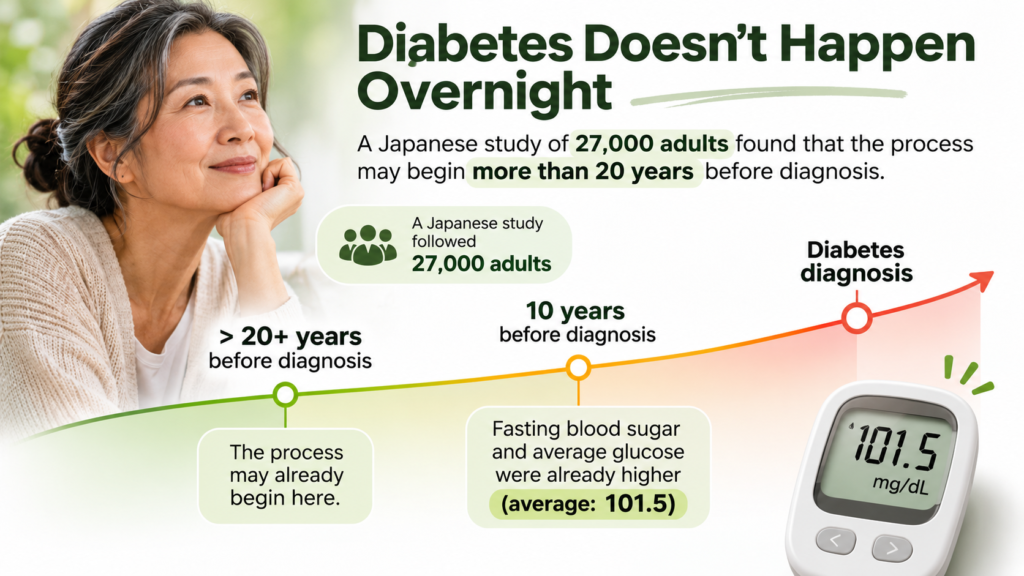
So what does metabolic dysfunction actually mean? Your body is not turning food into energy as efficiently as it should. It shows up as blood sugar creeping up, insulin working harder, blood pressure and cholesterol drifting, and weight settling around the middle. Most people living with it have no diagnosis at all. They just feel tired.
Now connect the dots. If more than nine out of ten adults are not metabolically optimal, and “normal” describes what is common, then a normal result can simply mean you are just as off as everyone else. That is the gap between a normal range and an optimal one, and it is exactly where fatigue and brain fog like to hide.
The Mistakes That Keep Fatigue and Brain Fog Hidden

If you have been told everything looks fine while you feel anything but, you have not failed. Standard panels do their job well: they catch disease once it surfaces. The trouble starts when we ask them to do a different job.
Mistake one: reading “in range” as “all clear.” A result inside the range answers one question, “Is this abnormal enough to diagnose?” It does not answer the question you actually care about, which is “Is this working well enough for me to feel my best?”
Mistake two: testing the signal instead of the function. Many routine tests measure a storage form, a messenger, or an end result rather than what happens inside your cells. A complete blood count looks for anemia, but you can run low on iron long before you become anemic. A serum B12 test shows how much B12 floats in your blood, not whether your cells use it. TSH comes from your pituitary gland, not your thyroid. An A1C measures your sugar, not how hard your insulin worked to keep it there. Each test is useful. None tells the whole story alone.
Mistake three: fixing it yourself with a supplement. When people finally suspect low iron, many grab an iron pill. Please don’t. Too much iron causes real harm, and ferritin, your iron storage marker, rises with inflammation. A great-looking ferritin can sometimes hide an underlying problem. Supplementing on a guess can make the picture murkier and the fix slower.
Five Labs Worth Asking About
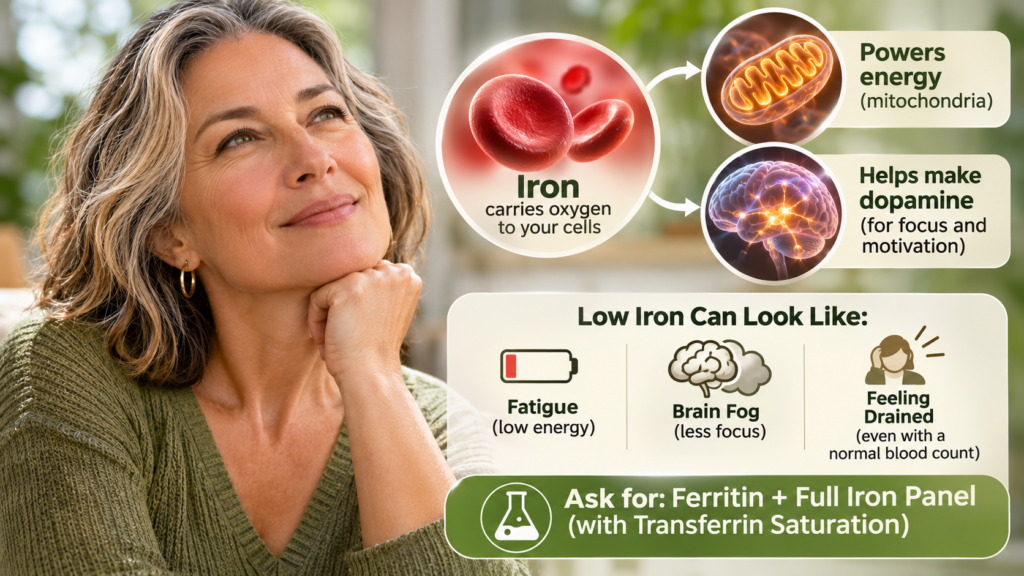
1. Iron, beyond the blood count
Iron carries oxygen to every cell. Inside those cells, it supports your mitochondria, the energy factories that make fuel. It also helps your brain make dopamine, which drives focus and motivation. Low iron means less oxygen, less energy, and less focus. That is the tired-and-foggy combination.
A 2024 study in JAMA Network Open looked at U.S. adults with no anemia. Among them, 11% had depleted iron stores and another 15% had functional iron deficiency, meaning the iron exists but does not reach the cells that need it. That is roughly one in four adults with a normal blood count, and the functional kind showed up in men and women at every age.
Does fixing it help? A randomized trial in the Canadian Medical Association Journal tested iron in women with fatigue, no anemia, and ferritin under 50. Iron cut fatigue scores by 48%, compared with 29% on placebo.
Then there is the cutoff problem. A 2024 study of more than 255,000 primary care patients found that raising the low end of the ferritin range from 15 to 30 nearly tripled iron deficiency diagnoses. Same patients. Different line.
Ask for: ferritin, plus a full iron panel with transferrin saturation, read together rather than one number at a time.

2. Vitamin B12, plus MMA and homocysteine
Your brain runs on B12. It protects the coating of your nerves and helps your cells make energy. In February 2025, UCSF researchers published a study in the Annals of Neurology on 231 older adults, average age 71, with no dementia. Those with lower B12, still inside the normal range, had slower processing speed, slower signaling in their visual pathways, and more white matter lesions on brain MRI. The researchers called for rethinking what counts as enough.
A serum B12 test cannot tell you whether B12 does its job inside your cells. Two markers can: methylmalonic acid (MMA) and homocysteine. When B12 falls short, both build up, like trash piling up when the garbage truck does not come. MMA is the most specific to B12. Homocysteine also rises with low folate and B6, and it matters for your heart, brain, and bones on its own.
Here is the connection almost no one makes. You need stomach acid to pull B12 out of food and to absorb iron, and many adults make less acid as they age. Studies estimate that 7% to 32% of older adults have atrophic gastritis, a thinning of the stomach lining that cuts acid production. Prescription acid blockers called PPIs also play a role: their use among U.S. adults roughly doubled, from 4.1% in 1999 and 2000 to 8.6% in 2017 and 2018. In one study of adults 60 and older, 37% had taken PPIs for more than six months, and higher doses tracked with lower active B12.
Then there is H. pylori, a stomach bacterium that about 44% of adults worldwide carry, often with no obvious symptoms. When it inflames the main body of the stomach, it can cut acid production and compete for iron. International gastroenterology guidelines recommend testing for it when someone has unexplained iron or B12 deficiency, and clearing the infection has improved both, sometimes without supplements. In some people, H. pylori does the opposite and raises acid, which is how it can lead to an ulcer. Either way, you want to know if it is there.
Ask for: B12 plus MMA and homocysteine, especially if you are over 50, take an acid reducer or metformin, or eat mostly plant-based. If your iron and B12 stay low no matter what you do, ask about an H. pylori breath or stool test. If gut symptoms are part of your picture, working with a dietitian who specializes in nutrition for gastrointestinal disorders in Sarasota can help connect those dots.

3. Thyroid, beyond TSH
Many screening panels check TSH and stop there. But your pituitary gland makes TSH, not your thyroid, so it does not show what happens in most of your tissues.
Your thyroid makes mostly T4, a storage form. Your body converts T4 into T3, the active form that powers energy and metabolism, or into reverse T3, which works like a brake pedal. Stress, illness, inflammation, and heavy dieting send more toward the brake. Conventional care rarely orders reverse T3, for a practical reason: guidelines do not support routine use, and the standard treatment stays the same regardless of the number. In my world, reverse T3 serves as a clue about what else in your body is pressing the brake.
Then there is Hashimoto’s, the autoimmune condition behind most underactive thyroid cases, where the immune system attacks the thyroid. A 2025 review in Frontiers in Endocrinology reported that people with thyroid antibodies had more fatigue, trouble thinking, irritability, and low mood, even with normal TSH and free T4. It also noted that 5% to 10% of people with Hashimoto’s keep having symptoms despite normal numbers. Thyroid medication replaces the hormone. It does not address why the immune system attacks. That question pulls in iron, selenium, vitamin D, gut health, liver function, blood sugar, stress, and sleep. Antibodies can show up years before TSH moves, an early warning you only get if you test.
Ask for: TSH, free T4, free T3, reverse T3, and thyroid antibodies (TPO and thyroglobulin).

4. Fasting insulin, alongside glucose and A1C
A1C reflects your average blood sugar over about three months, and under 5.7% counts as normal. But A1C measures the sugar, not the effort it took to keep it there. That effort is insulin. Your body can hold glucose in range for years by pumping out more and more insulin. By the time A1C rises, the problem has been building below the surface for a long time. One more twist: low iron can make A1C read higher than it really is. These labs influence each other.
A 2025 meta-analysis of 87 studies covering more than 235,000 adults found insulin resistance in 26.5% of them. That is one in four. Insulin resistance produces exactly what you came here for: the afternoon crash, the fog after meals, the “I need something sweet” feeling.
Ask for: fasting insulin with fasting glucose, so you can calculate HOMA-IR (fasting glucose in mg/dL times fasting insulin in µIU/mL, divided by 405). Then look at your triglyceride-to-HDL ratio on the cholesterol panel you probably already have. This is also why I love continuous glucose monitors with clients. You see real crashes in real time, and what causes them. If blood sugar sits at the center of your story, look for a nutritionist for diabetes in Sarasota who works with optimal ranges, not just diagnostic ones.
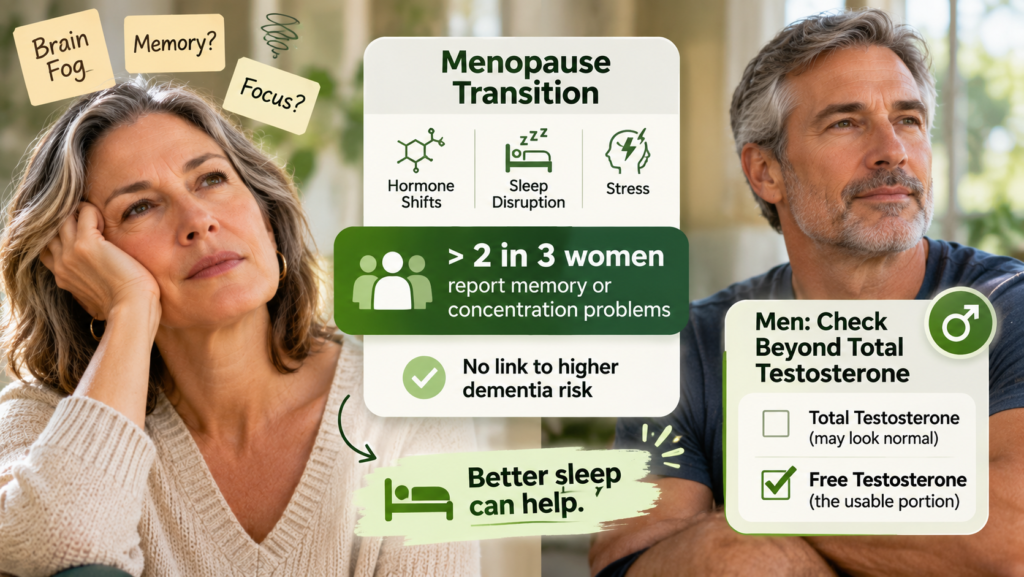
5. Midlife hormones, for women and men
For women, a 2026 review in The Lancet Obstetrics, Gynaecology & Women’s Health found that more than two-thirds report memory or concentration problems through the menopause transition. The reassuring part: those symptoms showed no link to higher dementia risk. Hormone shifts, sleep disruption, and stress all contribute, and sleep is one you can work on starting tonight.
For men, testosterone declines gradually, and total testosterone alone can look fine while the usable portion runs low. Ask about free testosterone as well. Neither of these appears on a routine panel.
Bonus Tips & FAQs
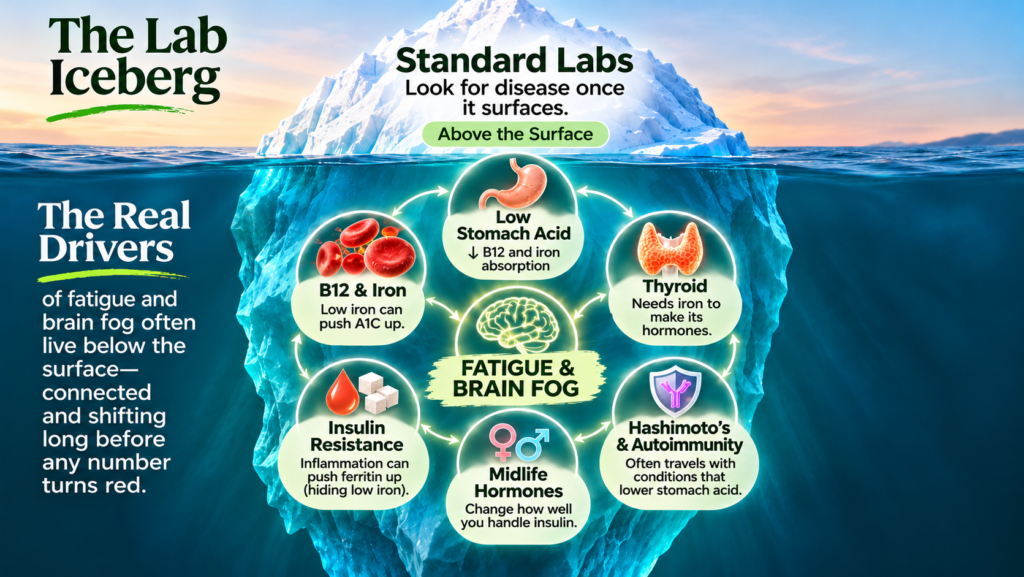
Picture an iceberg. Standard labs look at the part above the water, built to catch disease once it surfaces. Most of what drives fatigue and brain fog lives below the waterline, shifting long before any number turns red.
Below the surface, these five connect. Low stomach acid drains both B12 and iron. Your thyroid needs iron to make its hormones. Hashimoto’s often travels with other autoimmune conditions, including one that lowers stomach acid. Inflammation and insulin resistance push ferritin up, which can hide low iron. Low iron can push A1C up. And midlife hormone shifts change how well you handle insulin. Every number can sit inside the normal range while the real answer stays underneath. In my practice, this is REVEAL, the first phase of the London Wellness Method: we read your labs against optimal ranges and connect the patterns.
Do I need all of these tests? Not always. Your symptoms, age, medications, and diet guide which ones matter most. Bring this list to your provider and decide together.
Can I start iron or B12 on my own? Skip iron until you have tested. Too much causes harm, and inflammation can distort ferritin. Test first, then treat.
My labs were normal last year. Should I retest? If symptoms persist, yes, and ask for the markers above, not just a repeat of the same panel.
Key Takeaways
- A normal lab result means your number looks like the population’s, and only 6.8% of U.S. adults have optimal cardiometabolic health.
- You can run low on iron for years without anemia, so ask for ferritin and transferrin saturation, not just a blood count.
- Serum B12 alone misses the full picture; MMA and homocysteine show whether B12 works inside your cells.
- TSH comes from your brain, not your thyroid, and thyroid antibodies can appear years before TSH moves.
- A normal A1C can hide an insulin system working overtime; fasting insulin reveals the effort.
- These five labs connect, so read them together, against optimal ranges.