You went in for bloodwork. The doctor called with good news: everything’s normal. But you don’t feel normal. You feel tired in a way sleep doesn’t fix. Your recovery from workouts takes longer than it used to. Little infections seem to linger. And somewhere in the back of your mind, you’re wondering if “normal” and “healthy” are actually two different things.
They are. And the gap between them is where most chronic disease quietly takes root — for years, sometimes decades, before it ever shows up as a diagnosis.
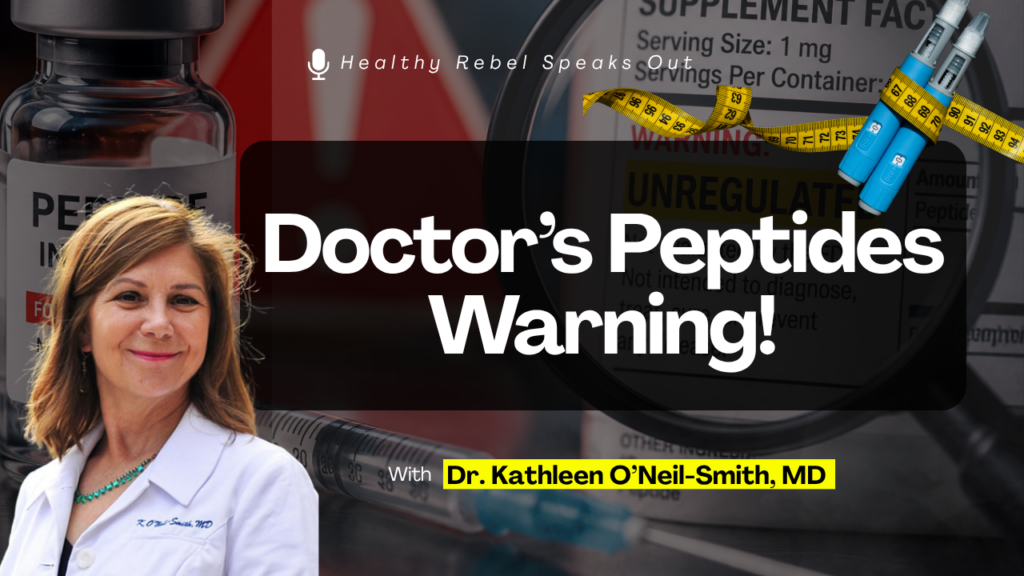
I recently sat down with Dr. Kathleen O’Neil, a Boston-based physician who has spent over two decades working at the frontier of peptide therapy, stem cells, and exosomes — biological treatments most primary care doctors were never trained to use. Her own path into this work started with a personal medical crisis, deepened through her son’s traumatic brain injury, and has since led her to help patients reverse conditions conventional medicine had already written of f as permanent. What she shared is some of the most important information I’ve come across in years of doing this work, and I want to make sure you don’t miss it.

Why This Actually Matters
Here’s the uncomfortable truth: most of the labs your doctor runs are designed to catch disease once it has already arrived, not to catch the years of dysfunction that led there. Dr. O’Neil put it simply — the numbers aren’t the story, the patient is the story. She described a patient in her 40s who had been through the hospital system multiple times, told repeatedly that her labs were normal. When Dr. O’Neil actually looked at those labs, the woman’s white blood cell count was 2.2 and her B12 was 300. Technically inside a lab range. Functionally, a red flag for a collapsing immune system.
That’s the piece almost nobody talks about: the immune system is the thread connecting nearly everything we fear about aging — heart disease, cognitive decline, autoimmune conditions, even how well we recover from a common cold. Dr. O’Neil, who spent a year working in a hospital morgue early in her career, made a point I haven’t stopped thinking about: most people don’t die from the disease itself. They die from the infection that a weakened immune system could no longer fight off. If you’re only tracking cholesterol and glucose, you’re missing the system that’s actually running the show.

The Mistakes Most People Make
The first mistake is treating “normal” as the finish line. Lab ranges are built from population averages, not from what optimal looks like for you. A “normal” result can still represent a significant decline from where your body used to function — and if no one is comparing today’s numbers to your own history, that decline goes unnoticed until it becomes a crisis.
The second mistake is waiting for a diagnosis before taking action. Dr. O’Neil calls these missed opportunities “inflection points” — windows where the body is sending clear signals long before a disease has a name. Bone density loss starting in your twenties. Testosterone declining a steady 1% per year after 30. The metabolic upheaval of perimenopause, which can raise cardiovascular risk within a single decade. These aren’t future problems. They’re present-tense biology, and they respond to intervention now — not later.
The third mistake is the one I want you to sit with the longest: assuming that anyone selling a peptide, a compound, or an injectable online is a safe source. This is not a category where you want to save money or skip due diligence.
Bonni's Clinical Recommendations
If you take away nothing else from this conversation, take away this: work only with a licensed practitioner who has something real to lose. Dr. O’Neil was direct about this — she practices with a medical license, a DEA license, and malpractice liability, which means she is professionally and legally accountable for everything she recommends. When you work with someone who isn’t licensed, there is no accountability sitting across the table from you. You are quietly assuming all of the risk yourself, often without realizing it.
That accountability has to extend to sourcing as well. Ask any practitioner offering peptides, exosomes, or injectable compounds three direct questions: Where does this come from? Is it pharmaceutical-grade? Can you show me a Certificate of Analysis? A trustworthy, certified compounding pharmacy will have documentation of purity and traceability without hesitation. If a provider can’t answer clearly, that’s your answer.
From there, start with data, not guessing. A complete blood count with differential and iron studies — including ferritin, TIBC, and transferrin saturation — is inexpensive and reveals more about your immune resilience than almost any other basic panel. Pair that with biological age testing so you understand your actual physiological age, not just your birthday, and you’ll know exactly where to focus first: immune health, hormone balance, bone density, or metabolic function.
This is precisely the kind of functional, whole-person assessment I build into every client relationship at London Wellness. If you’re ready to find your own inflection point before it turns into a diagnosis, explore how we approach personalized longevity care.

Bonus Tips & FAQs
Are GLP-1 weight loss drugs bad? Not inherently. Dr. O’Neil is clear that they can be useful — but only as a bridge, not a destination. They quiet the “rain” of weight gain so you can do the deeper work of repairing gut and metabolic health underneath.
Is hormone replacement therapy safe? The fear around HRT stems largely from a flawed early-2000s study that misapplied its own data. Current research, and a growing number of major medical institutions, now support hormone therapy as protective for both cardiovascular and cognitive health when used appropriately.
What’s one simple test I can ask my doctor for today? A CBC with differential and a ferritin/TIBC panel. Both are inexpensive, widely available, and reveal far more than most standard checkups.
Do I need to wait for a health scare to start paying attention? No — and that’s the entire point. The best time to intervene is before the fall, not after.

Key Takeaways
- Normal lab results don’t guarantee optimal health; they only rule out overt disease.
- The immune system, not any single organ, is often the real driver behind chronic illness and aging.
- Bone loss and hormonal decline begin decades before menopause or diagnosis — waiting costs you time you can’t get back.
- Always work with a licensed practitioner who carries real professional accountability, not an unlicensed seller online.
- Insist on pharmaceutical-grade sourcing and a Certificate of Analysis for any peptide, exosome, or compounded therapy.
- GLP-1 medications can help, but they are a bridge to deeper repair work, not a permanent solution.
You don’t have to wait for a scary number to start paying attention to your body’s signals. If you’re ready to understand your own inflection points and build a plan around real data instead of guesswork, I’d love to talk with you.
Get Connected with Dr. K
- Website: Treatwellness’s.Boston
- Social Media: Treatwellness_